Why Do I Feel Like I Have Lost Myself? How Individual Counselling Can Help
There are seasons in life when you can still be functioning, still showing up, still doing what needs to be done — and yet quietly feel like you are no longer fully yourself.
You may still be working, caring for others, replying to messages, meeting expectations, and getting through the day. But underneath that, something can feel off. You may feel emotionally flat, unusually irritable, disconnected from what you want, or unsure of what you even need anymore. That feeling can be deeply unsettling, especially when there is no single dramatic reason for it. The Mind Space currently offers individual counselling in Parkhurst, Fourways / Douglasdale, and online across South Africa, which makes support accessible in person or remotely.
Often, this feeling grows slowly. It can build through people-pleasing, chronic stress, burnout, caregiving, grief, difficult relationships, or major life transitions. You may not notice it at first because you are busy coping. Then one day, you realise you have been living on autopilot for a long time.
Why can feeling lost happen even when life still looks “fine” on the outside?

One reason this experience is so confusing is that it does not always look dramatic. Sometimes nothing has visibly fallen apart. You may still be seen as capable, reliable, kind, strong, or high-functioning. But internal disconnection does not need an external collapse to be real.
This often happens when a large part of your identity has been built around a role rather than a fuller sense of self. That role might be parent, partner, caregiver, achiever, peacekeeper, helper, or the person who “holds everything together.” When life changes, or when that role begins costing too much emotionally, you can start to feel unsteady in ways that are hard to name.
“A large part of one’s identity often becomes defined by their role.”
— Dr. Adam Borland.
That quote speaks to something many people feel in different stages of life: when your role becomes your anchor, change can leave you feeling disoriented. The feeling of having “lost yourself” is often not about weakness. It is about a long period of adapting so thoroughly that you stopped checking in with the parts of you that were being quietly left behind.
What does “losing yourself” often look like in everyday life?
For many people, this feeling does not arrive as one clear emotion. It shows up through subtle but persistent changes in how you relate to yourself and the world.
It may look like:
not knowing what you really want anymore
struggling to enjoy things you used to care about
feeling emotionally numb, detached, or flat
constantly focusing on other people’s needs first
second-guessing yourself more than usual
feeling like you are always “on,” but rarely present
not quite recognising the version of yourself you have become
When this happens, people often assume they just need rest, motivation, discipline, or a better routine. Sometimes those things help. But often, the deeper issue is that emotional disconnection has been building underneath the surface for quite some time.
Why do people-pleasing and self-abandonment so often sit underneath this feeling?
Because it is very hard to stay connected to yourself when most of your energy is going toward managing other people’s comfort, expectations, or reactions.
People-pleasing can start as a coping strategy. It may have helped you avoid conflict, gain approval, stay safe, or feel needed. But over time, it can make your own needs feel less important, less clear, or harder to access at all. Cleveland Clinic notes that chronic people-pleasing can lead to stress, frustration, resentment, and difficulty putting your own needs first.
“People-pleasers will give and give and give to the point of their own detriment.”
— Dr. Adam Borland.
That kind of giving can look generous from the outside while feeling depleting on the inside. The problem is not kindness. The problem is what happens when your own inner world becomes so deprioritised that you no longer know what you feel, want, need, or believe without first filtering it through someone else.
Why can burnout, caregiving, relationships, and life transitions all make this worse?
Because these are the very experiences that often require adaptation, endurance, and emotional stretching over long periods of time.
Burnout can leave you functioning from depletion rather than clarity. Caregiving can make your role feel so central that your own identity gets pushed to the edges. Difficult relationships can train you to prioritise harmony, survival, or emotional monitoring over authenticity. Life transitions can strip away the role or structure you were depending on, leaving a confusing gap behind. Harvard Health notes that burnout can lead to anxiety, relationship strain, and difficulty functioning at home or work if emotional reserves stay depleted for too long.
Sometimes, what feels like “losing yourself” is actually the accumulated effect of living too long in a way that required self-abandonment to keep going.
That insight is especially important because it shows how identity loss is not always dramatic. It can happen gradually, through the repeated habit of overriding yourself.
“Sometimes, boundaries are so evaporated that you can lose touch of whether you’re doing things for another person or for yourself.”
— Dr. Susan Albers.
How can individual counselling help you reconnect with yourself?

Individual counselling can help by slowing the pattern down enough for you to understand it. When you have been in survival mode, people-pleasing mode, burnout mode, or performance mode for a long time, it becomes difficult to hear your own inner voice clearly. Counselling creates space to notice what has been happening emotionally, not just what has been required of you practically.
At The Mind Space, individual counselling can support people who feel emotionally overwhelmed, disconnected, uncertain, burned out, or stuck in patterns that no longer feel like them. The aim is not to tell you who you “should” be. It is to help you reconnect with what feels true, steady, and emotionally sustainable for you.
Counselling may help with:
understanding how you became disconnected from yourself
identifying people-pleasing, burnout, or emotional shutdown patterns
rebuilding self-trust and clearer boundaries
reconnecting with your needs, values, and preferences
reducing shame around feeling lost
making sense of life changes, grief, or role shifts
For many people, one of the most important parts of this work is learning to relate to themselves with more compassion instead of more criticism. Harvard Health describes self-compassion as a way of being more understanding toward yourself when you suffer, fail, or feel inadequate.
That shift matters. When you feel like you have lost yourself, the work is often not about pushing harder. It is about listening more honestly and responding more gently.
“Self-compassion means being warm and understanding toward ourselves when we suffer, fail, or feel inadequate.”
— Kristin Neff.
What happens in counselling when you do not feel like yourself anymore?
Many people worry they need to arrive with a perfect explanation. But often, the starting point is much simpler than that. It might just be the quiet recognition that something no longer feels right.
Counselling can begin with questions like:
When did this start to shift?
What has life been asking of you lately?
Where have you been overriding your own needs?
What roles are taking up most of your emotional energy?
What feels missing right now?
From there, the work often becomes about awareness, self-compassion, and choice. Instead of only reacting to life, you begin noticing your patterns more clearly. You may start identifying what drains you, what steadies you, where your boundaries thin out, and where your sense of self has become too tangled up with being needed, productive, agreeable, or emotionally available to everyone else.
Importantly, this is not about blaming yourself for how you coped. It is about understanding why those coping patterns made sense, and whether they are still serving you now.
Can online individual counselling help when life already feels overwhelming?
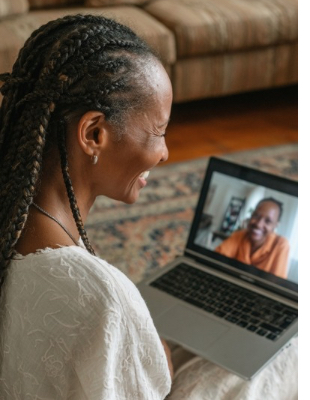
Yes. For many people, online counselling reduces the friction that makes reaching out feel too hard.
If you already feel stretched, disconnected, or emotionally overloaded, even travelling to an appointment can feel like one more demand. Online counselling can make support feel more accessible, especially when privacy, flexibility, and comfort matter. The Mind Space offers online sessions as well as in-person support in Johannesburg.
Online individual counselling can be especially helpful if:
your schedule is already full
you live outside central Johannesburg
you feel more comfortable opening up from home
decision fatigue makes extra logistics feel harder
you want support that is easier to maintain consistently
Is individual counselling available in Parkhurst, Fourways, and online across South Africa?
Yes. The Mind Space currently offers counselling in Parkhurst / Parktown North, Fourways / Douglasdale, and online across South Africa. Its site highlights flexible support across these locations, with individual and relationship counselling available in person and online.
That means you can access support whether you would prefer:
in-person counselling in Parkhurst, Johannesburg
in-person counselling in Fourways / Douglasdale, Johannesburg
online counselling from anywhere in South Africa
Frequently Asked Questions

Is it normal to feel like I have lost myself?
Yes. Many people feel this way during burnout, grief, caregiving, difficult relationships, or major life changes. It is more common than many people realise.
Does feeling lost mean something is seriously wrong with me?
Not necessarily. It often means something in your life has been asking too much of you, or that your own needs and identity have been pushed into the background for too long.
Can counselling help even if I cannot explain exactly why I feel this way?
Yes. You do not need to arrive with perfect clarity. Counselling can help you understand what has been shaping the feeling and what may help you reconnect with yourself.
What if people-pleasing is part of why I feel lost?
That can be a very real part of it. When most of your energy goes into keeping others comfortable or meeting expectations, it can become hard to stay connected to your own needs and limits.
Is online individual counselling available if I am outside Johannesburg?
Yes. The Mind Space offers online counselling across South Africa, alongside in-person sessions in Parkhurst and Fourways / Douglasdale.
Key Takeaways
Feeling like you have lost yourself can happen even when life still looks “fine” from the outside.
It often grows through burnout, people-pleasing, caregiving, difficult relationships, or major life transitions.
Individual counselling can help you reconnect with your needs, values, boundaries, and sense of self.
The Mind Space offers support in Parkhurst, Fourways / Douglasdale, and online across South Africa.
Ready to take the next step?

If you have been feeling disconnected from yourself, unsure of what you need, or quietly exhausted by holding everything together, support is available. At The Mind Space Counselling, individual counselling offers a warm, thoughtful, non-judgemental space to understand what has been happening and begin reconnecting with yourself more clearly and compassionately.
📍 In-person sessions available in Parkhurst, Johannesburg
📍 In-person sessions available in Fourways / Douglasdale, Johannesburg
🌐 Online counselling available across South Africa
👉 Find out more or book a session via the Services page.
👉 You can also reach out directly via WhatsApp for a confidential conversation.
👉 You may also find the Stress, Relationships, and Trauma categories helpful.


