
What Happens In Couples Counselling? What To Expect Before Your First Session
Booking a first couples counselling session can bring up a surprising amount of anxiety.
You may be wondering whether you will have to explain every argument you have ever had. Perhaps you are worried your partner will say something you disagree with, that emotions will become overwhelming, or that the counsellor will decide who is responsible for the problems.
You might even be sitting on very different sides of the decision. One of you may feel hopeful about counselling while the other is nervous, sceptical, or simply attending because the relationship matters enough to try.
These concerns are common.
The first couples counselling session is usually not about solving your whole relationship in one conversation. It is an opportunity for the counsellor to begin understanding your relationship, what has brought you to counselling now, how each partner experiences the difficulties, and what you would both like to be different.
At The Mind Space Counselling, couples can access supportive relationship counselling in Parkhurst / Parktown North and Fourways / Douglasdale, Johannesburg, as well as online across South Africa. The practice's existing couples counselling approach focuses on communication, conflict, trust, emotional connection and helping both partners feel heard.
Why can the first couples counselling session feel so intimidating?

Because your relationship is deeply personal.
You are not simply describing a problem at work or asking for advice about a practical decision. You may be talking about hurt, resentment, intimacy, betrayal, loneliness, parenting, money, communication, or fears about whether the relationship will survive.
For some couples, these are conversations they have already tried to have many times. For others, counselling may be the first place certain feelings are spoken aloud.
That vulnerability can make the first session feel emotionally significant before it has even started.
Dr Anthony Chambers, a board-certified couple and family psychologist and former president of the APA's Society for Couple and Family Psychology, offers a helpful way of understanding the process:
“The client is the relationship.”
— Anthony Chambers, PhD, ABPP, American Psychological Association.
This does not mean each person's individual experience becomes unimportant. It means the focus shifts away from proving who is right and toward understanding what keeps happening between you.
What actually happens during the first couples counselling session?
Every counsellor works somewhat differently, so there is no single script that applies to every first appointment.
However, the early part of couples counselling is generally about understanding rather than immediately fixing.
The Gottman Institute describes initial couple work as including an exploration of the relationship's history, its strengths and difficulties, and patterns that become visible when partners discuss an unresolved issue. The APA also describes structured couple assessment as beginning with understanding the relationship problem and both partners' perspectives before deciding how the work should move forward.
Your first session may include conversations about:
what has brought you to counselling now
how long you have been together and important relationship changes
what each of you believes is currently difficult
what still works well between you
recurring arguments or communication patterns
what each person hopes counselling might help with
You may also discuss practical matters such as confidentiality, boundaries, session structure and what you can expect going forward.
You do not need to arrive with perfectly articulated goals. “We keep having the same argument and don't know how to stop” can be enough of a starting point.
Will the counsellor decide which partner is right?

This is probably one of the biggest fears couples bring into the room.
Couples counselling is not intended to work like a courtroom where each person presents evidence and waits for the counsellor to deliver a verdict.
Dr Chambers specifically explains that couple work is not about deciding who is right or wrong. Instead, the focus is on understanding what prevents the relationship from functioning in the way both partners would like.
This is slightly different from saying that every behaviour is equally acceptable.
Accountability still matters. A counsellor can acknowledge when something has been hurtful, when a boundary has been crossed, or when one person's behaviour is contributing strongly to the difficulty.
But the broader aim is to understand the relationship pattern rather than turn one partner into “the problem.”
For example, one person may criticise because they feel ignored. Their partner may withdraw because they feel attacked. That withdrawal then makes the first person push harder.
Without understanding the pattern, each person leaves believing the other's behaviour proves they were right all along.
What if we start arguing during the session?
You are allowed to disagree in couples counselling.
In fact, disagreement can sometimes give the counsellor useful information about how your relationship functions when emotions rise.
Do you interrupt one another? Does somebody become defensive? Does one person go quiet? Does the argument quickly move from the current issue into a list of everything that has ever gone wrong?
A counsellor can slow that interaction down and help you notice what happens before conflict escalates.
This is not about teaching couples never to argue. Healthy relationships still contain disagreement.
Cleveland Clinic psychologist Dr Adam Borland explains the foundation well:
“A healthy relationship is built on three main tenets: good communication, honesty and trust.”
— Adam Borland, PsyD, Cleveland Clinic.
Couples counselling can provide space to practise those things while the conversation is actually happening, rather than only discussing afterwards what both people wish they had said differently.
Why might the counsellor ask about arguments that happened years ago?

Because relationships develop patterns over time.
The first session may include questions about how you met, periods when the relationship felt strong, important transitions, previous hurts and moments when things began to change.
That history can help put today's conflict into context.
A disagreement about household responsibilities, for example, may carry years of feeling unappreciated underneath it. An argument about a phone may actually be connected to a previous breach of trust. A conflict about parenting may reflect deeper differences in how each partner experienced family life growing up.
The goal is not to drag every old wound back into the present.
It is to understand which experiences are still influencing the way you respond to one another now.
Dr Julie Gottman captures the importance of unfinished relationship experiences particularly well:
“Within every regrettable incident is a conversation the couple still needs to have.”
— Dr Julie Gottman, clinical psychologist and co-founder of The Gottman Institute.
Sometimes couples discover that the argument they thought they had “finished” years ago was never actually emotionally resolved.
Will we always be in the room together?
Usually, couples counselling centres on the relationship, which means both partners commonly attend together.
However, some approaches include separate conversations with each partner during the early assessment process. Dr Chambers, for example, describes an approach where the couple initially meets together, each partner later has an individual meeting, and everyone then comes back together to discuss the way forward.
That does not mean every counsellor follows this structure.
At your first session, it is completely reasonable to ask:
Will we always attend together? What happens if you need to speak to one of us separately? How does confidentiality work if individual conversations occur?
Different practitioners may have different policies, so understanding these boundaries early can prevent confusion later.
How should you prepare for your first couples counselling session?
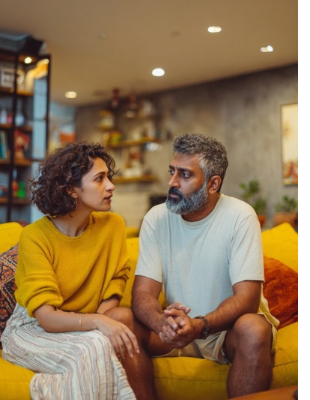
You do not need to rehearse your story or build a case against your partner.
Trying to prepare every detail can actually increase anxiety. A more helpful approach is to spend a little time thinking about what you hope will change.
Before the session, consider:
Why now? What made you decide it was time to seek support?
What feels hardest? Which pattern is creating the most distress?
What would improvement look like? How would the relationship feel different?
What could you work on too? Not only what you want your partner to change.
The final question can be particularly useful.
Couples counselling tends to become more productive when both partners can gradually move from “Here is everything you need to fix about them” to “Here is what happens between us, and here is the part I may be able to change.”
What if one person wants counselling more than the other?
This happens frequently.
You do not have to be equally enthusiastic on day one.
One partner may have suggested counselling months ago. The other may have agreed only when the relationship reached a difficult point. Sometimes one person believes the problems are serious while the other thinks things are being exaggerated.
Dr Chambers notes that it is not unusual for partners to arrive with different perspectives and levels of willingness. His view is that relationship difficulties are best understood when both people's experiences can be heard, because each may see the same relationship very differently.
A useful first goal may therefore simply be curiosity.
You do not have to promise that everything will work. You can begin by trying to understand what your partner is experiencing and what the counsellor notices about the relationship.
Do we need to decide whether we are staying together before counselling starts?

No.
Some couples attend because both are strongly committed to rebuilding. Others arrive uncertain.
Counselling does not need to begin with a predetermined outcome.
Cleveland Clinic notes that relationship counselling can sometimes help couples strengthen their connection and, in other cases, gain greater clarity about what comes next.
The counsellor's role is not to pressure you to stay together at all costs.
It is to help you understand what is happening, what would need to change, and what each of you genuinely wants.
That can be particularly important after infidelity, long-term emotional distance, repeated conflict or periods where one partner has begun questioning the future of the relationship.
When might joint couples counselling not be the safest first step?
There is an important difference between relationship conflict and abuse.
If there is active violence, coercive control, intimidation, fear or concern that something disclosed during counselling could lead to retaliation afterwards, joint sessions may not be the safest starting point.
APA guidance stresses that safety and power imbalances should be carefully considered when intimate partner violence is present, and that joint work is not appropriate for every couple.
In those circumstances, individual counselling or specialist domestic-violence support may be more appropriate first.
Trauma-informed relationship support should never require somebody to speak openly in a setting that places them at greater risk.
Can couples counselling work online?
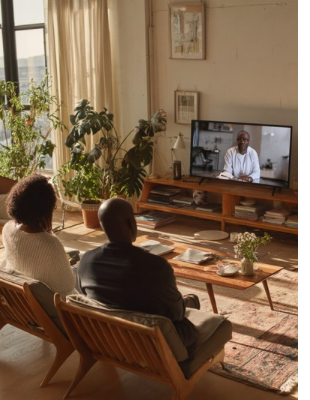
Online couples counselling can be a useful option, particularly when work schedules, childcare, travel or Johannesburg traffic make attending together difficult.
The Mind Space currently offers online counselling for couples across South Africa, and couples may join from the same space or, where appropriate, from different locations. Its online sessions follow a similar guided-conversation structure to in-person counselling.
Online sessions can also make it easier for couples to maintain consistency when one partner travels frequently or the couple lives outside Johannesburg.
The important practical consideration is privacy. Both partners should ideally have a space where they can speak openly without being overheard or interrupted.
Is couples counselling available in Parkhurst, Fourways and online across South Africa?
Yes. The Mind Space offers couples counselling in Parkhurst / Parktown North and Fourways / Douglasdale, Johannesburg, alongside online counselling across South Africa.
Couples seek support for many reasons, including communication difficulties, repeated conflict, trust concerns, emotional distance, changing family roles and the feeling that they keep having the same conversation without getting anywhere.
You do not need to wait until the relationship is at breaking point.
Sometimes counselling starts simply because both of you know that the way you are communicating is no longer working.
Frequently Asked Questions

What questions will a counsellor ask us in the first session?
You may be asked what brought you to counselling, how you each see the problem, important parts of your relationship history, current strengths, recurring conflicts and what you hope will change. The exact questions depend on the counsellor's approach.
Do we need to discuss sex or infidelity in the first session?
Not necessarily in detail. If intimacy or betrayal is central to why you are seeking counselling, it will probably need to be acknowledged, but sensitive issues do not usually need to be fully unpacked before enough safety and context have been established.
What if we disagree about why we are coming?
That is completely possible. Your different explanations are useful information rather than a reason counselling cannot work. Part of the process is understanding how each of you experiences the relationship.
How long does couples counselling take?
There is no universal timeline. The length of counselling depends on the issues involved, how long patterns have been present, both partners' goals and what kind of support the relationship needs.
Can we attend couples counselling online outside Johannesburg?
Yes. The Mind Space offers online couples counselling across South Africa as well as in-person sessions in Parkhurst and Fourways, Johannesburg.
Key Takeaways
The first couples counselling session is usually about understanding the relationship, not solving everything immediately.
A counsellor is not there to decide who wins an argument; the focus is on patterns, communication and the relationship itself.
You do not need perfectly matching goals or equal enthusiasm before your first appointment.
Some difficult emotions or disagreements may arise during sessions, and these can help reveal patterns that need attention.
The Mind Space offers couples counselling in Parkhurst, Fourways, Johannesburg, and online across South Africa.
Ready to take the next step?

If you and your partner keep returning to the same arguments, feel increasingly disconnected, or simply want a calmer space to understand one another, couples counselling can provide somewhere to begin.
At The Mind Space Counselling, couples are offered a warm, non-judgemental environment where both partners can slow the conversation down, explore what has been happening, and work toward clearer communication and greater understanding.
📍 In-person sessions available in Parkhurst / Parktown North, Johannesburg
📍 In-person sessions available in Fourways / Douglasdale, Johannesburg
🌐 Online couples counselling available across South Africa
Explore The Mind Space counselling services
You can also reach out directly via WhatsApp for a confidential conversation.


