
Premarital Counselling In Johannesburg: Questions To Discuss Before Marriage
Planning a wedding can involve hundreds of decisions. Where will you get married? Who will be invited? What will you wear? Where will you live afterwards?
But some of the most important conversations happen away from the guest list and seating plan.
Marriage brings two individual histories, families, expectations, habits, values and ideas about the future into one partnership. Even couples who know each other deeply can discover that they have never really discussed how money will work, what boundaries with extended family might look like, how responsibilities will be shared, or what each person expects marriage to feel like.
Premarital counselling gives couples a structured space to have these conversations before marriage — not because something is necessarily wrong, but because clarity before a major commitment can strengthen understanding. The American Psychological Association describes premarital counselling as supportive guidance that can explore expectations, responsibilities, intimacy and possible areas of future conflict.
At The Mind Space Counselling, premarital counselling is part of the practice's current service offering, with in-person counselling available in Parkhurst / Parktown North and Fourways / Douglasdale, Johannesburg, alongside online counselling across South Africa.
Why have these conversations before marriage when your relationship already feels strong?

Because premarital counselling is not only about fixing problems.
In fact, one of its strengths is that couples can explore important subjects while the relationship feels connected, rather than waiting until a disagreement has become painful or entrenched. The APA notes that premarital work can be particularly strength-focused and skill-focused, helping couples clarify expectations and develop healthier ways of approaching future disagreements.
“Talking about things in advance … is really important.”
— Meredith Hansen, PsyD, relationship specialist quoted by the American Psychological Association.
The purpose is not to discover whether you agree on absolutely everything. Few couples do.
The more useful question is whether you understand where your differences are — and whether you can talk about them with honesty, curiosity and mutual respect.
Which questions reveal expectations couples often assume they already share?
Some expectations are easy to notice while dating. Others remain invisible until marriage changes the practical reality of daily life.
For example, both partners may say they want children but have never discussed when, how many, how parenting responsibilities might be divided, or what happens if the path to parenthood is different from what they expected. You may both value family while having very different ideas about how involved parents and relatives should be in your married life.
Useful premarital conversations often include questions such as:
What does a healthy marriage look like to each of us?
How do we want to handle money and major financial decisions?
Do we want children, and what are our expectations around parenting?
How will we divide household and emotional responsibilities?
What role will extended family, culture, faith or traditions have?
What do intimacy, affection and commitment mean to each of us?
The Gottman Institute's current guidance for couples preparing for marriage similarly highlights money, children, careers, religion or spirituality, daily life and long-term values as conversations worth having before the wedding.
The goal is not matching answers. It is understanding them.
How should couples talk about money before getting married?

Money conversations can feel surprisingly personal because money is rarely only about numbers.
One partner may associate saving with safety because money was uncertain growing up. Another may see spending on experiences as an important part of enjoying life. Someone may value financial independence, while their partner expects finances to become completely shared after marriage.
Psychologist Anthony Chambers explains that money can carry meanings connected to security, fairness, vulnerability and power — which helps explain why financial disagreements can become emotionally charged even when the numbers themselves seem straightforward.
Before marriage, it can be helpful to discuss:
current debt, savings and financial commitments
spending versus saving habits
whether finances will be separate, shared or a combination
how major purchases and financial decisions will be made
expectations around supporting relatives or extended family
The APA also notes that financial concerns are among the common sources of disagreement for couples.
A productive conversation is less about finding the “correct” system and more about ensuring neither person is walking into marriage with assumptions the other person does not know about.
What should you understand about conflict before you promise “forever”?
A strong relationship is not one where conflict never happens.
It is one where disagreement can happen without consistently damaging trust, dignity or emotional safety.
This is particularly important before marriage because personality differences do not usually disappear after the wedding. One partner may need time to think before discussing a problem. The other may become anxious when issues are left unresolved. One may be naturally organised while the other is more spontaneous.
Psychologist Dan Wile captured this reality memorably:
“When you choose a partner, you choose a particular set of problems.”
— Dan Wile, PhD, psychologist and relationship author.
That does not mean marriage should feel difficult by default. It means compatibility is not about eliminating every difference.
What matters is how you respond to those differences.
Premarital counselling can help couples notice whether disagreements quickly become criticism, defensiveness, silence, avoidance or attempts to win. It can then create space to practise clearer ways of expressing needs, listening and repairing after conflict.
Why do family backgrounds and traditions become more important after marriage?
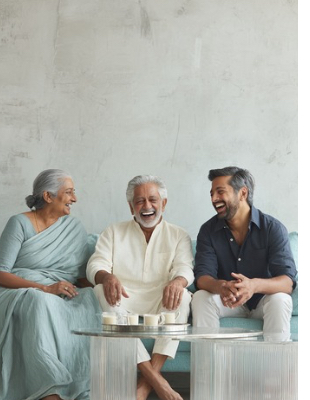
Every person enters marriage with a history.
Your childhood may have shaped what you believe about conflict, affection, money, privacy, gender roles, responsibility, religion, holidays and family loyalty — often without you consciously realising it.
One person may come from a family where relatives speak every day and arrive without calling. Their partner may come from a family where privacy and independence are strongly valued. Neither is automatically wrong, but those expectations can create tension if they have never been discussed.
APA guidance on premarital counselling specifically highlights family-of-origin conversations, including how couples will combine different traditions and expectations as they create their own household.
This can be especially important in Johannesburg and South Africa's diverse cultural context, where couples may be navigating different family traditions, languages, religions, cultural expectations or understandings of marriage.
Premarital counselling offers room to ask: What do we want to carry forward from our families, and what do we want to do differently?
How can couples talk about intimacy without making the conversation feel clinical or awkward?
Talking about physical and emotional intimacy can feel vulnerable, even in loving relationships.
Partners may have different expectations around affection, frequency of physical intimacy, privacy, initiation, boundaries or how closeness changes when life becomes stressful.
Not discussing these differences does not make them disappear.
Gottman-informed guidance encourages couples preparing for marriage to talk openly about intimacy rather than assuming that a partner automatically understands their wants and needs.
The same principle applies to emotional intimacy.
Do you want to talk through difficult emotions immediately or have time alone first? What helps you feel loved? What makes you withdraw? What does emotional support actually look like when you are struggling?
Cleveland Clinic psychologist Dr Adam Borland offers a helpful reminder:
“Monitor your own assumptions about what your partner is thinking or feeling.”
— Adam Borland, PsyD, Cleveland Clinic psychologist.
Marriage becomes easier to navigate when partners learn to ask rather than assume.
What can premarital counselling help you work through before the wedding?
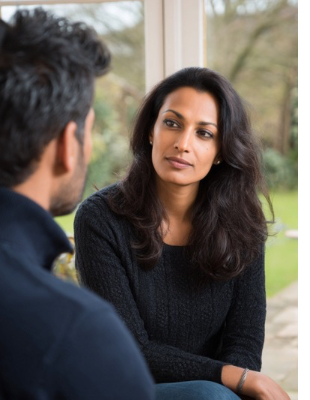
Premarital counselling is not a test that you either pass or fail. Nor is its purpose to search for problems that do not exist.
It is a chance to strengthen the skills that marriage will repeatedly ask you to use.
Counselling may help couples:
communicate more openly about difficult subjects
understand different expectations before they create resentment
identify conflict patterns and practise healthier repair
clarify boundaries with family and other relationships
discuss money, intimacy, parenting and future plans more comfortably
recognise existing strengths that can support the marriage
The APA's overview of premarital counselling emphasises exactly this combination of communication, expectations, intimacy, financial planning and conflict-resolution skills.
Sometimes the conversation confirms that you are largely aligned. Sometimes it reveals a subject that deserves more attention. Both outcomes can be useful.
What happens if premarital counselling reveals a major disagreement?
Discovering a meaningful difference before marriage can feel frightening.
You might uncover different views about having children, financial priorities, religion, family boundaries, where to live or what commitment should look like.
The purpose of counselling is not to immediately label that difference a deal-breaker.
Instead, you can explore how important the issue is to each person, what sits underneath the position, where flexibility exists and where it does not. The Gottman Institute similarly notes that premarital conversations are not about finding somebody who agrees with you on everything; they are about understanding differences and deciding how you will navigate them together.
Sometimes couples find a workable path they had not considered. Sometimes they recognise that a difference requires further thought.
Clarity can be uncomfortable, but entering marriage with unspoken incompatibilities is not necessarily kinder.
Is premarital counselling available in Parkhurst, Fourways and online across South Africa?

Yes. The Mind Space Counselling currently includes premarital counselling among its services, with in-person appointments available through its Johannesburg locations and flexible online counselling options.
You can access support in Parkhurst / Parktown North, Fourways / Douglasdale, or online across South Africa.
Online premarital counselling can be particularly useful for couples with demanding schedules, partners who travel, or couples who currently live in different locations. The conversation remains focused on helping you understand one another more deeply and prepare intentionally for the life you are building together.
Frequently Asked Questions
Do we need to have relationship problems to attend premarital counselling?
No. Premarital counselling can be useful for happy, stable couples who simply want to prepare intentionally for marriage. APA guidance describes the work as largely strength-focused and skills-focused rather than something intended only for relationships in distress.
What questions are usually discussed in premarital counselling?
Common areas include communication, conflict, finances, children, parenting, intimacy, family boundaries, careers, household responsibilities, values and expectations about married life. The exact conversations should reflect the couple's own circumstances.
What if we disagree on something important?
Disagreement does not automatically mean the relationship cannot work. Counselling can help you understand why the issue matters to each of you, what flexibility exists and whether you can reach an arrangement that respects both partners.
When should we start premarital counselling?
There is no single perfect time. Starting well before the wedding can give you enough space to explore important conversations without the pressure of last-minute wedding planning.
Can we attend premarital counselling online?
Yes. The Mind Space offers online counselling across South Africa in addition to in-person support in Parkhurst and Fourways, Johannesburg.
Key Takeaways

Premarital counselling is not only for couples experiencing problems.
Important conversations before marriage include money, children, intimacy, family, values, responsibilities and conflict.
Agreement on everything is not the goal; understanding how you will navigate differences matters more.
Premarital counselling can strengthen communication and clarify expectations before they become sources of resentment.
The Mind Space offers premarital counselling in Parkhurst, Fourways, Johannesburg, and online across South Africa.
Ready to take the next step?
Preparing for marriage is about more than planning the wedding. It is also an opportunity to understand the expectations, hopes, differences and strengths that both of you are bringing into your future together.
At The Mind Space Counselling, premarital counselling offers a warm, supportive and non-judgemental space for couples to have important conversations before marriage — without assuming that something needs to be wrong first.
📍 In-person sessions available in Parkhurst / Parktown North, Johannesburg
📍 In-person sessions available in Fourways / Douglasdale, Johannesburg
🌐 Online premarital counselling available across South Africa
Explore The Mind Space counselling services
You can also reach The Mind Space via WhatsApp for a confidential conversation.


