
Family Counselling In Johannesburg: When Family Conflict Starts Affecting Everyone
Every family disagrees. Different personalities, expectations, generations, values, and ways of communicating naturally create tension from time to time.
But there is a difference between a disagreement that passes and a pattern of conflict that begins shaping the atmosphere of the whole family.
Perhaps the same argument keeps returning without ever feeling resolved. Maybe one family member has become the person everyone blames, while somebody else has stopped talking altogether. Parents may disagree about boundaries or discipline. Siblings may barely speak. Children may sense the tension even when adults believe they have kept it hidden.
Eventually, family life can begin to feel organised around avoiding the next argument.
Family counselling can help when conflict is no longer only about one issue, but has become a repeated way of relating to one another. At The Mind Space Counselling, families can access supportive counselling in Parkhurst and Fourways, Johannesburg, as well as online across South Africa. Family counselling is part of The Mind Space's current counselling offering, alongside individual, couples, grief, trauma, and play-based support.
When does ordinary family disagreement become a pattern that needs attention?
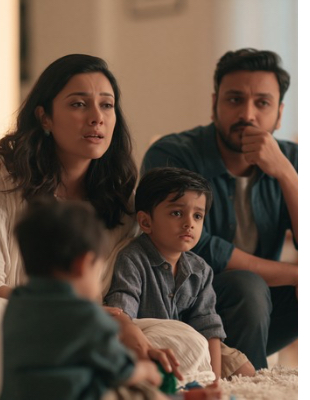
Conflict itself is not necessarily a sign that something is wrong with a family. Families can disagree strongly and still feel loved, respected, and emotionally connected.
The concern is usually what happens around the disagreement.
When conflict becomes repetitive, unresolved, or emotionally exhausting, family members often start adapting to it. One person becomes louder because they feel ignored. Another withdraws because conversations feel unsafe. Someone else tries to keep everybody happy. Children may become anxious, unusually quiet, irritable, or drawn into problems that belong between adults.
Signs that the conflict may be affecting the wider family include:
the same arguments happening again and again
family members avoiding one another to prevent tension
criticism, shouting, defensiveness, or prolonged silence becoming common
children feeling caught between adults
one person being treated as though they are the cause of every problem
home feeling tense even when nobody is actively arguing
Mayo Clinic guidance on family communication makes an important point: stress can make it harder for people to be patient, listen, and solve problems together.
The issue is therefore not whether your family ever argues. It is whether conflict is becoming the main way people communicate.
Why do families keep having the same argument when everyone wants it to stop?
Because recurring family arguments are often about more than the topic being discussed.
A disagreement may appear to be about screen time, chores, money, parenting, school, an adult child's decisions, household responsibilities, or boundaries with extended family.
Underneath it, however, people may be asking very different questions:
Do you listen to me? Do you respect me? Why am I carrying this alone? Why does nobody notice what I need? Can I trust you to follow through?
When those concerns are not clearly expressed, families can fall into predictable cycles.
A parent pushes harder because they feel ignored. A teenager shuts down because they feel criticised. The shutdown makes the parent become more insistent. Both eventually walk away feeling that the other person has proved their point.
This is why simply telling a family to “communicate better” is rarely enough.
Family counselling can help people identify what happens between them when tension rises, rather than focusing only on who started the latest argument.
What happens when one family member becomes “the problem”?

Families sometimes arrive for counselling convinced that everything would improve if one person changed.
It might be the teenager who is acting out. The parent who loses their temper. The sibling who refuses to communicate. The adult child who keeps crossing boundaries.
But family difficulties rarely exist in complete isolation. The APA's description of couple and family psychology emphasises looking at people within their broader relationship systems rather than considering behaviour only as an individual problem.
That does not mean nobody is responsible for their actions. It means counselling looks beyond a simple blame model.
Instead of asking only:
“What is wrong with this person?”
family counselling may explore:
“What keeps happening around this person, and how does everybody respond when it happens?”
That shift can be important. When one person is constantly positioned as the family's problem, the underlying communication, stress, grief, boundary difficulties, or relational patterns may never receive attention.
How does ongoing family conflict affect children and teenagers?
Children often notice considerably more than adults realise.
They notice changes in tone, doors closing after arguments, long silences, tension at dinner, parents disagreeing about them, and whether it feels safe to bring up a difficult subject.
High levels of ongoing parental conflict can be particularly difficult when children feel caught between the adults. The APA has highlighted the emotional strain children may experience when they become pulled into high-conflict family relationships.
“Children in these cases are often caught in a tug of war.”
— Michelle Parker, PhD, clinical psychologist, American Psychological Association.
The aim is not to create a family where children never see disagreement. That is unrealistic.
Children can also learn something valuable from seeing adults disagree respectfully, calm down, apologise, reconsider, and repair.
What tends to matter is whether the child feels responsible for the conflict or pressured to manage the emotions of the adults around them.
Family counselling can help bring those boundaries back into clearer focus.
What actually happens during family counselling?

Family counselling is a structured conversation designed to help family members understand the patterns behind conflict and find more constructive ways of responding to one another.
At The Mind Space, family counselling sits within a broader client-centred counselling approach focused on emotional support, communication, practical guidance, and healthier relationships.
The counsellor may begin by understanding why the family has reached out, how each person experiences the problem, and what everybody hopes might change.
The work may then include:
recognising recurring communication patterns
helping people express concerns without immediately blaming or defending
clarifying boundaries, roles, and expectations
practising healthier ways to approach difficult conversations
finding more constructive ways to repair after conflict
Importantly, the counsellor is not there to decide which family member has the “correct” version of events.
Family members can experience exactly the same situation very differently. Counselling creates enough structure for those perspectives to be heard without the conversation immediately becoming another argument.
What if everyone starts arguing during the counselling session?
Many families worry about this before they attend.
You do not have to arrive already knowing how to communicate well. In fact, the difficult interaction itself can help reveal the pattern that needs attention.
The useful question is what happens when emotions rise.
Does somebody interrupt? Does one person go quiet? Does the conversation suddenly shift into old grievances? Does everyone stop listening because they are already preparing their defence?
Clinical psychologist Susan Heitler, PhD, highlights the importance of noticing emotional intensity before trying to resolve conflict:
“First, check your emotional state and the tone of voice that's going to emerge with it.”
— Susan Heitler, PhD, clinical psychologist, American Psychological Association.
Counselling allows families to slow those moments down.
The aim is not to eliminate emotion. It is to develop ways of staying in a difficult conversation without the emotion taking complete control of it.
Does everybody in the family need to attend counselling?

Not always.
Which family members attend may depend on the nature of the concern, everyone's age, the family structure, and who is willing to participate.
Sometimes it makes sense for several family members to attend together. In other situations, the work might begin with parents, caregivers, siblings, or the family members most directly involved.
A reluctant family member does not necessarily mean counselling cannot begin.
Resistance can also come from fear. Someone may worry that the session will become an opportunity for everyone else to blame them.
An outside perspective can be particularly helpful when the family has become so immersed in the conflict that nobody can see the pattern clearly.
Even if everyone is not ready at the same time, counselling can help willing family members think differently about the part of the pattern they can influence.
“Sometimes, we just need to bring in someone from outside the situation to be able to see the situation clearly.”
— Kathryn Jones, PhD, pediatric psychologist, Cleveland Clinic.
Can family counselling help with adult children, siblings, or extended family too?
Yes. Family counselling is not only for parents with young children.
Conflict can emerge at every stage of family life. Adult siblings may carry unresolved hurt from childhood. Parents and adult children may struggle with boundaries as roles change. Families may become divided over caregiving, money, inheritance, marriage, cultural expectations, grief, or decisions involving ageing parents.
Sometimes these tensions have existed for years.
Family counselling cannot rewrite the past, but it can create a different kind of conversation about what the past has meant to each person and what the relationship needs now.
The goal does not always have to be perfect closeness.
Sometimes progress looks like clearer boundaries, less resentment, more respectful communication, or simply learning how to disagree without reopening every previous wound.
When might family counselling not be the safest first step?

This distinction is important.
Family counselling works best when family members have enough emotional and physical safety to speak honestly.
If there is active violence, intimidation, coercive control, abuse, or genuine fear of retaliation after a session, bringing everyone together may not be the safest place to start. APA guidance on high-conflict families specifically stresses the importance of recognising abuse, power imbalances, and safety concerns when choosing how family interventions proceed.
In those circumstances, individual counselling or appropriate specialist support may be more suitable first.
A trauma-informed approach does not assume that every family problem should automatically be discussed with everyone in the same room.
Safety comes before reconciliation.
Is family counselling available in Parkhurst, Fourways, and online across South Africa?
Yes. The Mind Space Counselling offers family counselling in Johannesburg, with in-person counselling available through its Johannesburg locations and online counselling available for clients across South Africa.
The practice currently provides family counselling alongside individual, couples, grief, trauma, play-based, and other counselling services. Its website also confirms both in-person and online booking options.
For families, online counselling may be useful when schedules are difficult to coordinate, relatives live in different places, or attending from home simply feels more practical.
Whether counselling takes place in Parkhurst, Fourways, or online, the aim remains the same: to create a calmer space in which family members can begin hearing one another differently.
Frequently Asked Questions

How do I know if my family needs counselling?
Consider family counselling when the same conflicts continue without resolution, communication regularly turns into shouting or withdrawal, relationships are becoming more distant, or tension appears to be affecting several members of the household.
What if my teenager refuses to attend family counselling?
Counselling may still be able to begin with parents or other willing family members. A teenager's reluctance may also reflect fear of being treated as “the problem,” so how counselling is introduced can matter.
Will the counsellor take sides?
The purpose of family counselling is not to appoint a winner. The counsellor helps the family understand perspectives, patterns, boundaries, and communication rather than simply deciding which person is right.
Can family counselling help after years of conflict?
It can still be useful. Longstanding patterns may take time to understand and change, but counselling can help families identify what keeps repeating and decide what a healthier relationship might realistically look like.
Can we attend online family counselling outside Johannesburg?
Yes. The Mind Space provides online counselling across South Africa in addition to its Johannesburg-based in-person services.
Key Takeaways
Family conflict becomes particularly difficult when the same patterns repeat and begin affecting the emotional climate of the whole family.
Family counselling focuses on patterns and relationships, rather than simply identifying one person to blame.
Children can be affected when they feel caught inside ongoing adult conflict.
Counselling can support communication, boundaries, parent-child relationships, conflict repair, and greater mutual understanding.
Family counselling is available through The Mind Space in Parkhurst and Fourways, Johannesburg, and online across South Africa.
Ready to take the next step?

When conflict has been part of family life for a long time, it can become difficult to imagine having the conversation differently.
At The Mind Space Counselling, family counselling offers a warm, non-judgemental space to slow things down, understand what is happening underneath the tension, and begin building healthier ways of communicating.
📍 In-person counselling available in Parkhurst, Johannesburg
📍 In-person counselling available in Fourways, Johannesburg
🌐 Online counselling available across South Africa
👉 Find out more or book a session via the Services page.
👉 You can also reach The Mind Space directly via WhatsApp for a confidential conversation.


